Trends come and go, but some symbols never quite disappear. Horses are one of them. You see them in old family signet rings, on vintage silk scarves, and carved into pub signs. More recently, they have found their way into modern accessories in a form that feels understated rather than costume-like.
That staying power says something about how firmly the horse is rooted in British visual culture, not just as a sporting image, but as shorthand for freedom, discipline and a romantic idea of the countryside.
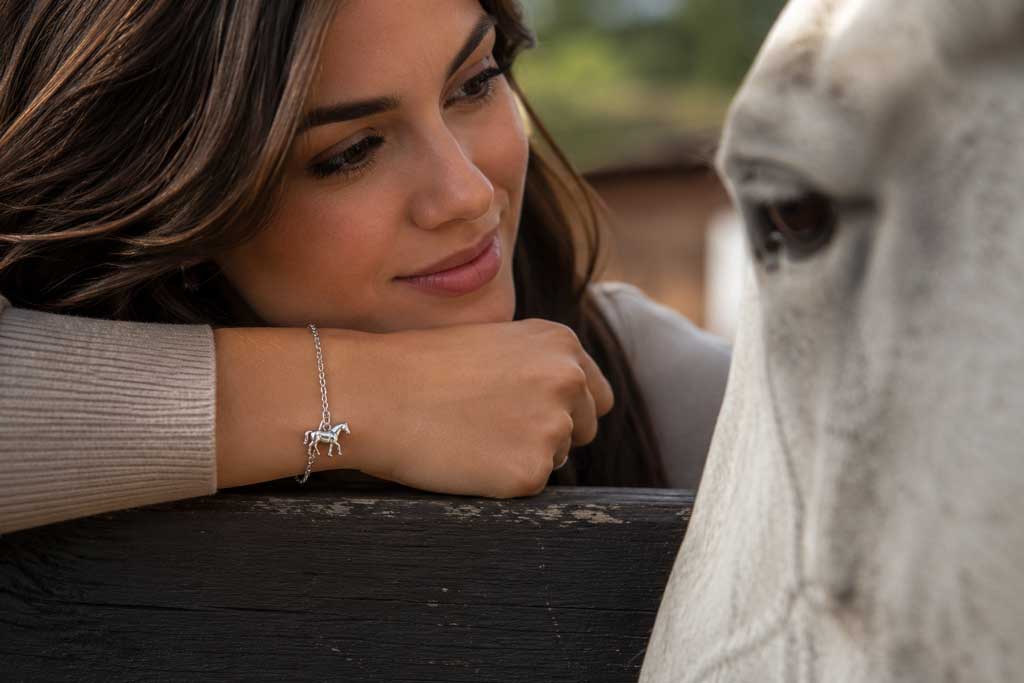
What stands out now is how much the motif has been stripped back. Instead of obvious trophies or novelty pieces, designers are using cleaner lines: a stirrup shape, a polished snaffle detail, a fine outline of a resting horse. That restraint gives equestrian references broader appeal. You do not need to ride, or even know much about it, to appreciate the balance of strength and elegance in well-made horse jewellery.
Often, it works because the reference is clear without being loud.
Why it still resonates
- It carries history without feeling old-fashioned.
- It suits everyday wear when the design is simple.
- It bridges town and country in a distinctly British way.
There is also a practical reason these pieces endure: they are easy to make personal. One person might wear a horse-inspired necklace because they grew up around stables. Another might simply like the sculptural shape of a curb link or stirrup form. The symbolism can be rich, but it does not need to feel solemn.
In a crowded accessories market, that quiet versatility matters. Horse motifs offer a rare mix of narrative, heritage and wearability. That is probably why they keep coming back, not as a passing fad, but as a familiar detail people still make room for in modern wardrobes.
Featured image credit: AI generated.